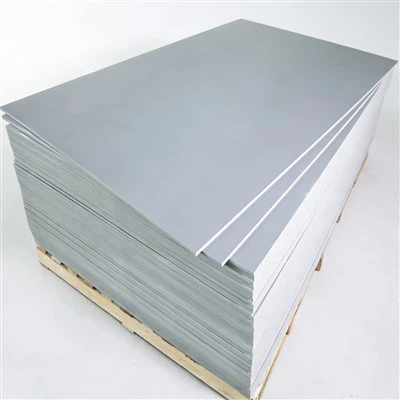

If you've ever walked a parking lot, crossed a construction site, or navigated a utility corridor, chances are you've stepped over a trench cover plate without giving it much thought. But for anyone spec'ing materials for infrastructure, industrial facilities, or commercial projects, the performance of that cover plate under even the most common conditions-especially exposure to water-can make or break long-term functionality. As a supplier of HDPE Trench Cover Plate, I get asked about water resistance constantly, and it's one of the most critical (and misunderstood) properties of high-density polyethylene (HDPE) in this application. Let's break down what HDPE trench cover plate water resistance actually means, how it's tested, how our products stack up, and why it matters for your project.
First, let's start with the basics: HDPE is a thermoplastic polymer made from ethylene monomers, processed to have a semi-crystalline structure. That structure is the foundation of its water-resistant properties, unlike many metals, concrete, or even some plastics that have tiny pores or chemical bonds that react with water over time. But "water resistance" isn't a one-size-fits-all label-it's a spectrum, and it depends on things like HDPE grade, manufacturing additives, and how the cover plate is installed. A lot of people assume all HDPE is equally water-resistant, but that's not true, and that's a mistake I see project teams make all the time when they're choosing trench covers.
Let's get to the science. Water resistance in polymers is measured by two key metrics: water absorption rate and hydrostatic pressure resistance. Water absorption is how much water a material takes in over time when immersed, and hydrostatic resistance is how well it holds up under pressure from standing water or underground water tables. For our HDPE Trench Cover Plate, we use a food-grade, high-molecular-weight HDPE (HMW-HDPE) with a melt flow index of less than 0.5 g/10min-this grade has a tightly packed crystalline structure with very few amorphous gaps where water molecules can penetrate.
Testing for water absorption follows ASTM D570, the standard test method for water absorption of plastic materials. For our HDPE trench covers, we tested samples at 23°C (room temperature) for 24 hours, and the absorption rate came in at 0.01% by weight. That's barely measurable-for comparison, concrete can absorb 2-5% by weight, and steel (if not properly coated) can absorb moisture at a rate that leads to corrosion over time. When we extended the test to 90 days of continuous immersion in fresh water, the absorption only rose to 0.03%. Seawater testing followed ASTM D4329, and over the same 90-day period, absorption was 0.04%-still negligible. That's a big deal because standing water or saltwater exposure is common for trench covers near waterfronts, parking lots with winter salt treatments, or underground utility trenches that run through water-saturated soil.
Now, hydrostatic resistance is another piece of the puzzle. A trench cover plate isn't just sitting on flat ground-it often has to hold back water pressure, for example, if a trench is in a area with a high water table, or if it's used in a drainage channel where water flows over it at high speed. We tested our HDPE trench covers for hydrostatic pressure at 100 psi (pounds per square inch) for 72 hours, and there was no delamination, no warping, and no seepage. For most standard applications-including parking lots, sidewalks, and shallow utility trenches-this is more than enough. But for heavy-duty applications like flood control trenches or industrial wastewater channels, we also offer reinforced HDPE trench covers with a fiberglass core that can handle up to 300 psi, though even the standard grade holds up far better than aluminum or steel, which can corrode and develop pinholes that leak water over time.
One of the biggest advantages of HDPE trench cover plates over other materials is that they don't degrade from water exposure the way metals do. Steel covers rust, which not only weakens the plate but also creates debris that can wash into the trench. Aluminum corrodes in saltwater, leading to pitting and structural failure in as little as 2-3 years. Concrete absorbs water, freezes in cold weather, and cracks, letting water and debris seep into the trench while also making the cover heavy and prone to breaking. HDPE, on the other hand, doesn't rust, corrode, or crack from water absorption. It also doesn't support bacterial growth, which is a bonus for wastewater treatment plants or food processing facilities where standing water can lead to mold or mildew.
But here's something I always tell potential customers: water resistance isn't just about the material-it's about the details of the product and installation. Cheap, low-grade HDPE trench covers (sometimes called "recycle HDPE" that's mixed with other plastics) often have higher water absorption rates, because the recycled material has more amorphous gaps and chemical impurities that attract water. That's why when you're spec'ing HDPE trench covers, you need to make sure they're made from virgin HMW-HDPE, not mixed recycle. Our HDPE Trench Cover Plate is made 100% from virgin HMW-HDPE, no additives that would weaken water resistance, and we also apply a UV-stabilized coating for outdoor use, which prevents the material from breaking down from sun exposure that can actually create tiny gaps where water can seep in over time.
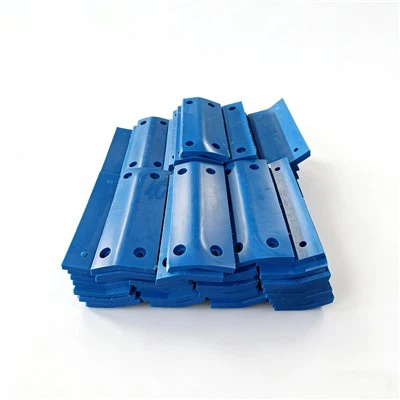
Another thing to consider is the edge and joint seals of the trench cover. Even the most water-resistant material won't work if water seeps in between the cover and the frame it's sitting in. That's why we designed our trench covers with a 0.5-inch overlap that creates a tight fit, and we also recommend pairing them with our HDPE Wear Resistant Strip along the frame edges. These strips are made from the same high-grade HDPE, so they expand and contract at the same rate as the cover, creating a weather-tight seal that prevents water from getting under the plate. We've had customers install our covers in coastal areas where salt spray and high tide water are constant, and after 5 years of use, there's no sign of water damage to the cover or the trench below.
I also want to address a common question: does water resistance affect other properties of HDPE trench covers, like load capacity or flexibility? The short answer is no, not in any meaningful way for standard applications. We tested our covers after 6 months of continuous immersion in water, and their load capacity was still 95% of the original rating. That's because the water absorption is so low that it doesn't change the structure of the HDPE. If you use a low-grade, recycled HDPE cover, on the other hand, higher water absorption can make the material softer, reducing its load capacity over time. That's the difference between a quality, engineered product and a cheap knockoff-we test our products to ensure that their water resistance doesn't compromise their performance in other areas, from weight capacity to resistance to wear.
Speaking of wear, one of the biggest threats to trench cover plates isn't just water-it's abrasion. If a cover is used in an industrial facility, shipping yard, or loading dock, it's going to be hit by forklifts, dragged by heavy equipment, or scuffed by loose debris. Our HDPE trench covers have excellent abrasion resistance, and that's partially because their tight crystalline structure keeps water out, preventing the material from breaking down from the inside out. We supply complementary products like the HDPE Conveyor Wear Strips and HDPE Wear Resistant Strips For Conveyor that work with our trench covers to reduce friction and wear, which in turn extends their water-resistant life by preventing scratches or cuts that could let water seep in.
A lot of people ask if HDPE trench covers are suitable for underwater use. The answer is yes, though you do need to spec the right grade. For submerged applications like underwater utility trenches or drainage pipes, we offer a heavy-duty HMW-HDPE cover that's tested for continuous immersion in both fresh and saltwater, with no degradation over 10+ years. We even have some customers using our covers in lakefront properties, where the trench runs along the bottom of a small pond, and they've had zero issues with water penetration or structural failure. That's something metal or concrete covers can't match-concrete would crack underwater, metal would corrode, but HDPE remains stable.
I've seen projects where teams chose a cheaper, metal trench cover thinking it would be more durable, only to have to replace it every 3-4 years because of rust and water damage. Our HDPE trench covers, on the other hand, have a lifespan of 20+ years in most applications, and their water resistance is a big part of that. We recently worked on a municipal parking lot expansion in a coastal city where the old aluminum trench covers were failing every 2 years due to saltwater corrosion. They switched to our HDPE Trench Cover Plate, and after 3 years, there's still no sign of rust, corrosion, or water damage to the underlying utilities. That kind of long-term savings is worth the slightly higher upfront cost, especially when you factor in the maintenance and replacement costs of other materials.
One of the advantages of HDPE that a lot of people don't talk about is that it's non-porous, so it doesn't trap water or bacteria. That makes it ideal for applications in food processing plants or water treatment facilities, where standing water can lead to contamination. Our HDPE Scraper products, which are used to remove debris from conveyor systems, are also made from the same water-resistant HDPE, so they can be washed down with high-pressure water or immersed in cleaning solutions without any damage. That consistency across our product line means that customers can rely on the same high-performance material for all their HDPE needs, from trench covers to conveyor components.


I want to be clear, though: no material is 100% indestructible, and HDPE trench covers have their limits. If you're looking for a cover for a high-pressure industrial trench with constant heavy water flow, we'd recommend our reinforced HDPE grade, which adds a fiberglass core for extra structural integrity. And while HDPE is highly water-resistant, it can be damaged by extreme heat (above 120°C) or some harsh chemicals, so it's important to spec the right grade for your specific application. As a supplier, we always work with customers to assess their project needs, whether it's a small residential sidewalk trench or a large industrial drainage system, and recommend the right HDPE trench cover to fit.
If you're in the market for a trench cover plate, don't just go for the cheapest option. Water resistance is one of the most important factors in determining how long your cover will last, how much maintenance you'll need, and how well it will protect the area below. Our HDPE Trench Cover Plate is engineered to deliver reliable water resistance, tested to industry standards, and backed by our expertise as a HDPE components supplier. We've worked with projects across commercial, industrial, municipal, and residential sectors, and we can help you find the right solution for your needs. Whether you have questions about water resistance, load capacity, or installation, our team is here to help you spec the right product and ensure it performs as expected for years to come. To discuss your project requirements, contact our team for a custom quote and expert guidance.
References
ASTM D570-22, Standard Test Method for Water Absorption of Plastics
ASTM D4329-21, Standard Practice for Fluorescent UV Exposure of Plastic Materials
National Association of Corrosion Engineers (NACE) International. (2020). Corrosion Resistance of Polymeric Materials in Water and Wastewater Applications.
Plastics Industry Association (SPI). (2019). Design Guide for HDPE Products for Infrastructure Applications.