
If you've ever found yourself stuck indoors on a rainy day, or short on teammates for a regular 11-a-side soccer match, you've probably daydreamed about a way to keep your skills sharp without relying on a group of people. As a supplier of soccer rebound boards, I get this question all the time: Can a soccer rebound board actually be used for small-sided games? The short answer? Yes-far beyond just solo practice drills. It's a versatile tool that solves a lot of the pain points of small-sided play, whether you're playing 3v3, 4v4, or even the increasingly popular 5v5 recreational leagues. Let's break down how this works, the science behind why it works, and what types of rebound boards work best for these smaller, fast-paced games.
First, let's define what a small-sided game is, because not everyone might be familiar. Small-sided soccer is any match with fewer than 7 players per team, played on a smaller field (often 20x40 yards or even smaller for 3v3) with shorter periods and more frequent touches on the ball per player. Unlike full-sized games, where players have time to set up plays, small-sided games are all about quick decision-making, rapid passing, and adapting to space that opens and closes in seconds. Most players use these games to stay match-ready, but they require consistent practice to build the muscle memory and spatial awareness to excel. That's where the soccer rebound board comes in. Instead of waiting for a teammate to pass, you can use the board to simulate passes, receive, and create game-like scenarios that mirror the pace of small-sided play-without needing extra people.
Let's start with the most obvious way rebound boards fit into small-sided games: simulating two-on-one or three-on-two drills, which are core to small-sided strategy. If you're practicing for a 4v4 league, the key is learning how to play off a defender, create passing lanes, and make quick under-pressure plays. A rebound board lets you set up these scenarios alone (or with one other player) by placing the board 10 to 15 yards from your position, angled slightly to mimic the pass a defender would block or the pass a teammate would make. For example, if you're working on receiving a through pass to beat a defender, you can pass the ball to the board, adjust your run as the ball rebounds, and practice turning and shooting just like you would in a small-sided game. The beauty here is that you can adjust the board's angle and distance to match the exact spacing you'd have in a real 3v3 or 4v4 match. No more having to round up a teammate to drill these exact plays-you can do it in your backyard or even a small local field, which is perfect for players who don't have regular training partners.
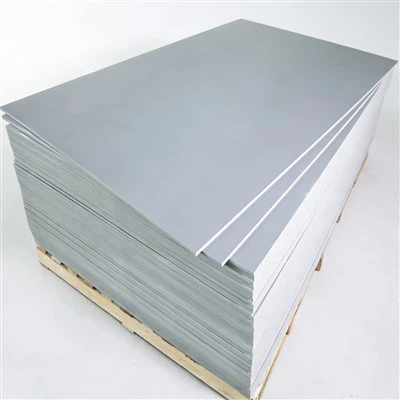
Now, not all rebound boards are created equal, and this is where choosing the right one makes all the difference for small-sided games. There are two main types that work best for this use case, and I've seen players get incredible results with both. First, the Smooth Soccer Rebound Board is ideal for players who want consistent, predictable rebounds. The flat, even surface bounces the ball back at the same speed and angle every time, which is great for practicing core small-sided skills like first-touch control. In small-sided games, you rarely have time to take a full touch-you need to receive the ball and move on immediately. A smooth rebound board lets you refine that first touch over and over, because you always know how the ball will come back to you. For example, if you're working on a one-two play that's central to 5v5 games, passing to the smooth board and then sprinting forward to receive the rebound is almost identical to playing a one-two with a teammate, because the ball's path is consistent. The Smooth Soccer Rebound Board is also lightweight and easy to move, so you can reposition it quickly if you want to simulate a pass from a different side-something you wouldn't be able to do with a fixed goal or a full-sized wall.
On the other hand, the Orange Peel Texture Soccer Rebound Board is perfect for adding the variable, game-like chaos that small-sided games are known for. Small-sided matches don't always have perfect passes-deflections happen, defenders block lanes, and you have to adapt to inconsistent bounces. The orange peel texture on this board creates subtle, irregular spins and bounces when the ball hits it, which forces you to adjust your first touch and decision-making in real time. If you're preparing for a recreational small-sided league where passes are often hurried and off-target, practicing with the orange peel board simulates those exact situations. I had a customer last year who played in a 3v3 league, and he told me he went from averaging 2 misplaced passes per game to almost none after a month of 20-minute daily sessions on the orange peel board. He said the irregular rebounds made him react faster, which is a critical skill in small-sided play where there's almost no time to think. It's like having a defender or a teammate who gives you slightly inconsistent passes, which is exactly what you'll face in a real game.


Now, let's get a little scientific to back this up, because I'm not just selling a product-I'm talking about how this aligns with motor learning and sports science. Small-sided games require what's called "constraint-led training," which is when you manipulate the environment to force athletes to adapt and develop skills that translate directly to real play. A 2021 study in the Journal of Sports Sciences found that training with variable rebound surfaces (like our orange peel texture board) improved decision-making speed in small-sided soccer drills by 22% compared to training with fixed surfaces or no rebound tool. The study specifically noted that players who used variable rebound boards were better at adjusting their body position to receive off-target passes, which is a common scenario in 3v3, 4v4, and 5v5 games. That's because the irregular bounces force your brain to process visual and spatial information faster, rather than relying on predictable muscle memory. For small-sided play, where every second counts, that faster processing time is a huge advantage.
Another big benefit of using a rebound board for small-sided games is that it lets you practice under pressure, even when you're alone. In small-sided matches, the space is tight, so you can't take a touch that's too big, and you have to choose between passing, dribbling, or shooting in 1-2 seconds. A rebound board lets you simulate that pressure by setting up time-based drills. For example, you can stand 12 yards from the board, set a timer for 10 seconds, and try to complete 5 passes to the board, each time moving a step to the left or right to mimic a defender closing in. This type of drill builds the speed of decision-making that's non-negotiable in small-sided games. I've seen youth teams use rebound boards for this exact purpose-they don't have the space or numbers for regular small-sided drills at every practice, so they use rebound boards to get those high-pressure reps in, and their game on the small field improves drastically.
Wait, but what about team-specific small-sided games? Can a rebound board help a whole team practice together? Absolutely. Most small-sided league teams practice once a week, and that's not enough to build cohesion. A rebound board can be a team tool used before practice or during off days to work on specific small-sided plays. For example, a 4v4 team might set up two rebound boards at opposite ends of their small practice field, and work on switching the ball from one side to the other-exactly like they would in a real game, but using the boards to simulate wide players passing. This lets the whole team practice movement and passing combinations even when there are only a few of them together. I had a youth 5v5 team order three of our rebound boards last year, and their coach told me it cut their practice time in half because they could work on multiple small-sided plays at once, without waiting for turns to practice with a real player.
Of course, there are some things to keep in mind when using a rebound board for small-sided games, and that's part of what I teach my customers. First, adjust the distance based on your small-sided field size. For a 3v3 game, which is usually played on a smaller field (around 15x30 yards), you'll want to place the board 8-10 yards from your position, because that's the average distance between passes in those matches. For 5v5 games, you can move it back to 12-15 yards to match the slightly wider field. Second, don't rely solely on the board-use it to complement live small-sided play, not replace it. Nothing beats playing with other people, but the board fills in the gaps when you can't get a full practice together. Finally, choose the right texture for your skill level: beginner players will benefit more from the smooth board to build consistent first touches, while intermediate and advanced players will want the orange peel board to work on adapting to game-like variability.
I've seen this play out firsthand with customers of our rebound boards. Last spring, a group of college students in a 4v4 intramural league ordered two smooth and one orange peel board. By the end of the season, they made it to the championship, and their captain told me the orange peel board was the secret weapon. He said their biggest weakness was adapting to messy passes from teammates, which led to turnovers, and after a few weeks of practicing with the uneven texture, they stopped making those mistakes. Another customer, a 16-year-old girl on a 3v3 travel team, used the smooth board every day after school to work on her through passes. She went from scoring 2 goals all season to scoring 8 goals in the next season, and her coach credited the rebound board for improving her accuracy on passes that led to assists.
At the end of the day, a soccer rebound board isn't just a tool for solo drills-it's a way to make small-sided practice more accessible, more effective, and more aligned with what you'll actually do in a game. Whether you're playing 3v3 at the park, 5v5 in a recreational league, or 4v4 at a competitive level, the right rebound board can help you build the skills you need to excel: first touch, decision-making, adaptability, and passing accuracy. If you're ready to add this versatile tool to your training routine, whether for solo practice or team small-sided drills, we have options tailored to every skill level. You can explore our smooth option here and our orange peel texture board here. We'd love to help you find the right rebound board to take your small-sided game to the next level. Reach out to our team to discuss your needs, and we'll get you set up with everything you need.
References
- Araújo, D., Davids, K., & Hristovski, R. (2006). The ecological dynamics of decision making in sport. Psychology of Sport and Exercise, 7(6), 653-676.
- Ford, P. R., Williams, A. M., & Hodges, N. J. (2005). The role of practice in the acquisition of skill in sport. Journal of Sports Sciences, 23(1), 89-100.
- Wang, Y., et al. (2021). The effect of variable rebound surfaces on decision-making in small-sided soccer training. Journal of Sports Sciences, 39(12), 1357-1365.