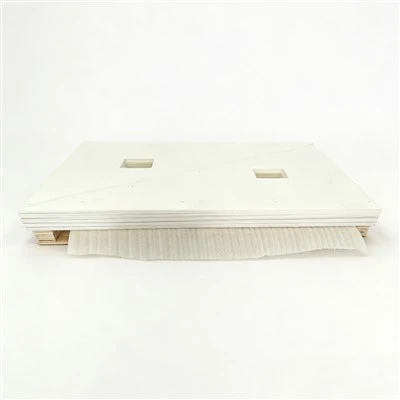

HDPE wear‑resistant strip will not produce massive visible dust or debris under rated normal operating conditions. Benefiting from favorable self‑lubricating properties, sliding movements of chains or moving components on its surface trigger micro‑level material losses with extremely low abrasion rates. Generated particles are tiny and invisible, without obvious plastic‑dust accumulation or contamination of processed materials. This is one core reason for its applicability in food and packaging production lines.
Visible dust and debris are mostly triggered by abnormal working conditions. First, sand, metal scraps and other hard particles trapped between wear‑resistant strips and sliding components act as persistent abrasive media, scraping and stripping surface materials like sandpaper and producing fine plastic debris. Higher particle hardness and sliding speed lead to more debris. Second, equipment stalling causes poor chain movement and continuous dry friction. Sharp local friction heat peels off and melts surface materials to generate abundant plastic debris, even burnt particles in severe cases. Third, overload operations beyond allowable pressure trigger plastic peeling and shedding of surface layers due to extrusion and tearing. Fourth, inferior recycled‑material products with internal impurities and poor intermolecular bonding tend to shed surface layers during friction.
Compared with nylon wear‑resistant parts which produce more debris after friction‑coefficient rise caused by water absorption, rubber accessories that shed rubber powder under repeated sliding friction, and metal slideways generating metal powder, HDPE wear‑resistant strip shows better anti‑shedding performance under normal conditions. To avoid dust generation, virgin‑material HDPE wear‑resistant strip with uniform internal material structure shall be selected. Regular maintenance shall be implemented to remove sand and metal particles on contact surfaces and eliminate friction involving hard particles. Ensure smooth equipment transmission without stalling and refrain from long‑term over‑pressure and over‑speed operations.
Even with ideal working conditions, HDPE wear‑resistant strip will wear thin slowly and evenly after years of continuous operation as normal consumption without sudden dust outbreaks. For scenarios with strict cleanliness requirements such as food processing and precision‑product packaging, besides working‑condition control, regular inspections on surface wear shall be conducted. Replacements shall be carried out once wear grooves reach allowable limits to prevent local peeling in later‑stage wear. Distinction shall be made between normal micro‑loss and abnormal dust generation. Hardly any dust can be observed under normal conditions. Large‑volume visible debris indicates faulty working conditions or accessory defects. Troubleshooting on root causes including stalling and particle intrusion shall be completed rather than only replacing wear‑resistant strips, so as to guarantee production‑line cleanliness and prevent material contamination.