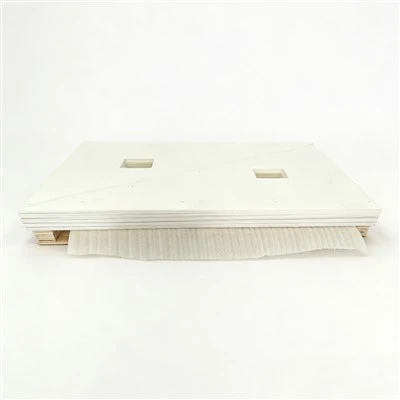
HDPE wear‑resistant strip integrates multiple advantages in friction performance, corrosion resistance, impact resistance, processing‑assembly and cost. It serves as a popular sliding wear‑resistant accessory for medium‑friction industrial scenarios, replacing metal, nylon and rubber components to reduce equipment losses and operation‑maintenance expenses for various conveying and automatic mechanical equipment.
First of all, it has prominent friction and self‑lubrication advantages. Its low friction coefficient and inherent self‑lubricating properties enable smooth sliding of chains and moving components without additional lubricating oil. It saves lubrication‑maintenance work and avoids material pollution caused by oil contamination, especially suitable for food and packaging production lines where oil is forbidden. It reduces vibration during operation and greatly cuts operating noise compared with hard‑contact metal slideways to improve workshop environments. It will not scratch matching surfaces of chains and metal workpieces during sliding, protecting mating parts and extending service life of complete equipment components.
Secondly, it boasts outstanding corrosion and moisture resistance. HDPE wear‑resistant strip has extremely low water absorption without water‑absorption‑caused expansion or performance degradation under humid or water‑washing conditions. It tolerates dilute acids, alkalis and salt‑medium corrosion and never rusts like steel parts, eliminating risks of rust‑debris‑triggered material contamination. It can work stably in humid workshops, water‑washing production lines and mild chemical environments with favorable anti‑aging performance and low risks of aging and pulverization under ordinary indoor conditions.
It achieves excellent impact‑toughness performance. It absorbs impact energy under workpiece strikes and chain impact loads and resists cracking or fragmentation. It delivers superior impact resistance compared with some hard engineering plastics, with lower failure rates under equipment start‑stop cycles and accidental workpiece collisions. It has much lower self‑weight than metal accessories of identical specifications, reducing overall equipment loads. It supports flexible on‑site cutting and drilling with pre‑fabricated mounting holes for easy assembly and adjustment.
It has remarkable cost‑effectiveness. Its material procurement cost is lower than high‑end wear‑resistant plastics such as ultra‑high‑molecular‑weight polyethylene and polytetrafluoroethylene. Its performance fully meets application requirements under medium‑load conditions without high‑cost premium materials, balancing equipment performance and procurement budgets. Controllable spare‑part replacement costs reduce enterprise consumable expenditures. Compared with rubber parts, it has stronger sliding‑wear resistance against rapid aging and cracking. Unlike nylon parts, its performance will not degrade due to stalling failures induced by water absorption.
Nevertheless, it has performance limitations. Its wear‑resistance ceiling is lower than ultra‑high‑molecular‑weight polyethylene with limited high‑temperature tolerance. It is not fit for extreme‑working‑condition scenarios featuring heavy loads, high speed and continuous scouring by massive hard particles. For most light‑to‑medium‑load industrial applications, HDPE wear‑resistant strip provides fully qualified core‑performance support with balanced performance, easy installation and favorable cost. It effectively reduces equipment downtime and spare‑part replacement frequency and acts as an ideal solution for sliding wear‑resistant positions of industrial machinery.