
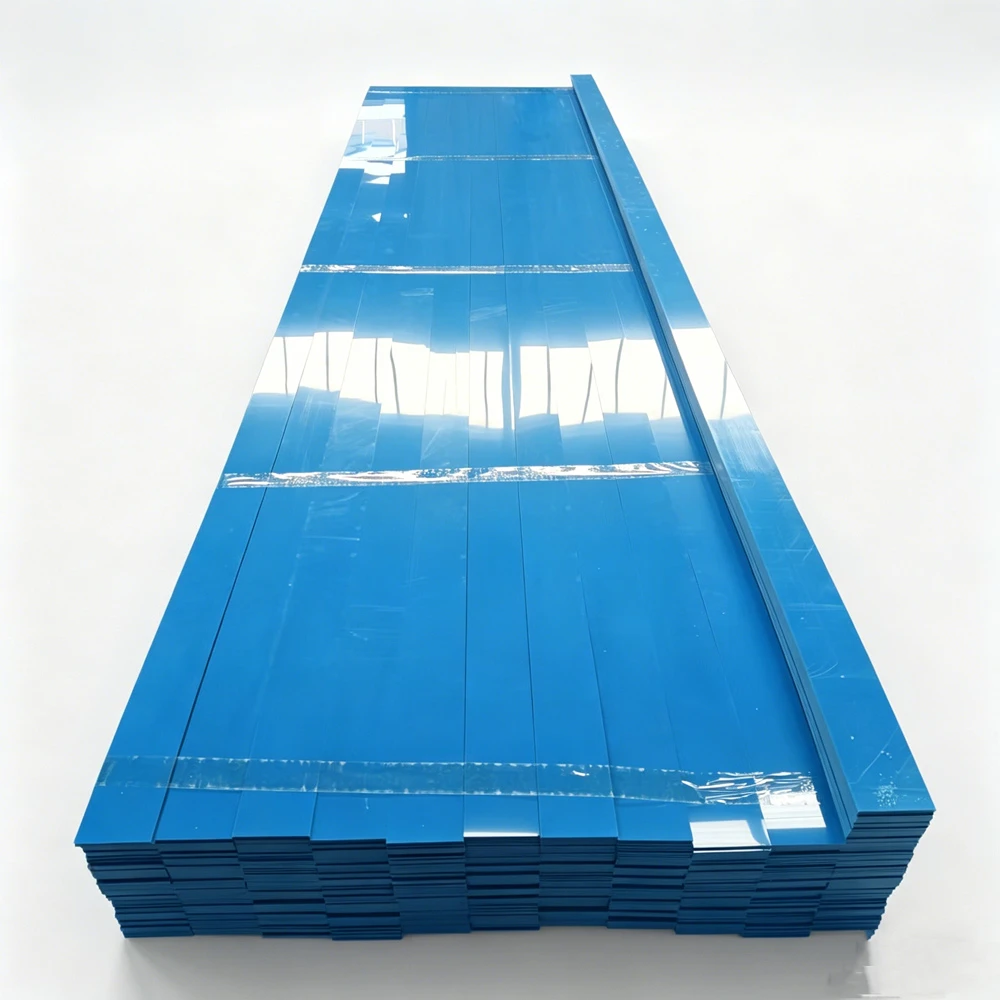
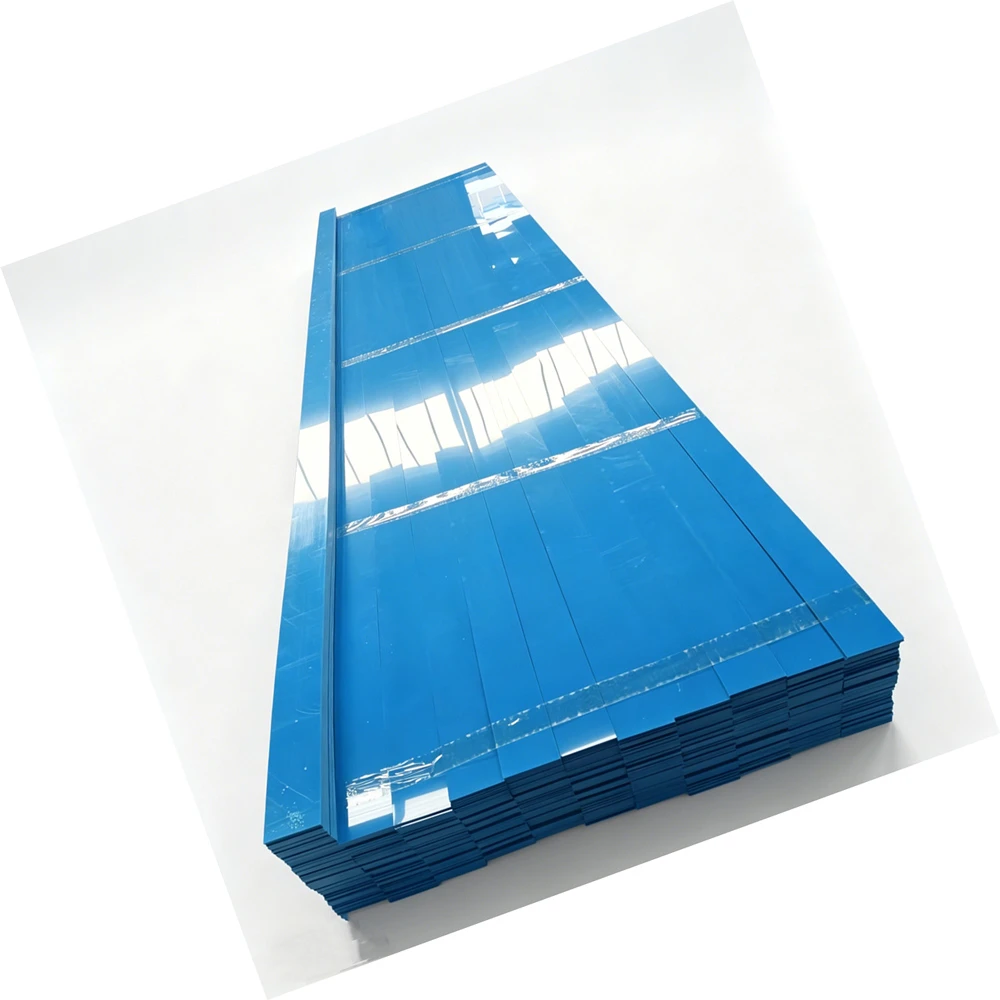
HDPE wear resistant strips are manufactured from high-density polyethylene and offer a range of advantages in industrial machinery, material conveying, and equipment protection applications. Compared with some traditional contact protection materials, they provide benefits in terms of wear resistance, friction performance, corrosion resistance, and routine maintenance.
First, excellent wear resistance is one of the most important characteristics of HDPE wear resistant strips. During continuous equipment operation, friction can occur between materials, mechanical components, and contact surfaces. Prolonged friction may cause surface wear and affect equipment performance. HDPE wear resistant strips can be installed in areas subject to frequent friction. Their material properties allow them to absorb part of the wear, helping reduce direct damage to the main equipment components.
Second, HDPE has a relatively low coefficient of friction, allowing it to provide a smooth contact surface. In conveying equipment and sliding mechanisms, HDPE wear resistant strips help reduce frictional resistance between moving components, allowing materials and mechanical parts to move more smoothly. This feature is particularly useful in continuously operating conveying systems and can also help reduce noise generated by friction.
Third, HDPE wear resistant strips offer good corrosion resistance. Industrial production environments may contain moisture, cleaning agents, and certain acidic or alkaline substances. Some conventional metal components can be vulnerable to corrosion under these conditions. HDPE offers good resistance to many commonly encountered chemical substances, making it suitable for certain humid environments and applications involving contact with chemicals. However, actual suitability should be evaluated according to the type, concentration, and temperature of the substances involved.
Fourth, HDPE wear resistant strips are lightweight. Compared with some metal wear-resistant components, they are easier to handle and install, making routine maintenance more convenient. Their relatively low weight also helps reduce the additional load placed on equipment structures, making them suitable for mechanical systems where component weight is an important consideration.
Fifth, HDPE offers good impact resistance. During material conveying, loading, unloading, and mechanical operation, equipment contact areas may be exposed to collisions or external impacts. HDPE can withstand a certain degree of impact, helping absorb some of the force generated by collisions and reducing localized damage to contact surfaces.
In addition, HDPE wear resistant strips have good water resistance and low water absorption. When used in humid environments, they are less likely to experience noticeable performance changes caused by moisture absorption than some other materials. Their relatively smooth surfaces also make it more difficult for materials to accumulate, simplifying routine cleaning and helping reduce equipment maintenance requirements.
Finally, HDPE wear resistant strips are suitable for a wide range of applications, including conveyors, guide rails, sliding devices, mining machinery, agricultural machinery, and other industrial equipment. Depending on the operating conditions, they can serve as guiding, separating, protective, and friction-reducing components.
In summary, the main advantages of HDPE wear resistant strips include wear resistance, low friction, corrosion resistance, lightweight construction, impact resistance, and ease of maintenance. These characteristics make them a practical material choice for equipment contact protection and friction-reducing applications in various industrial environments.


