

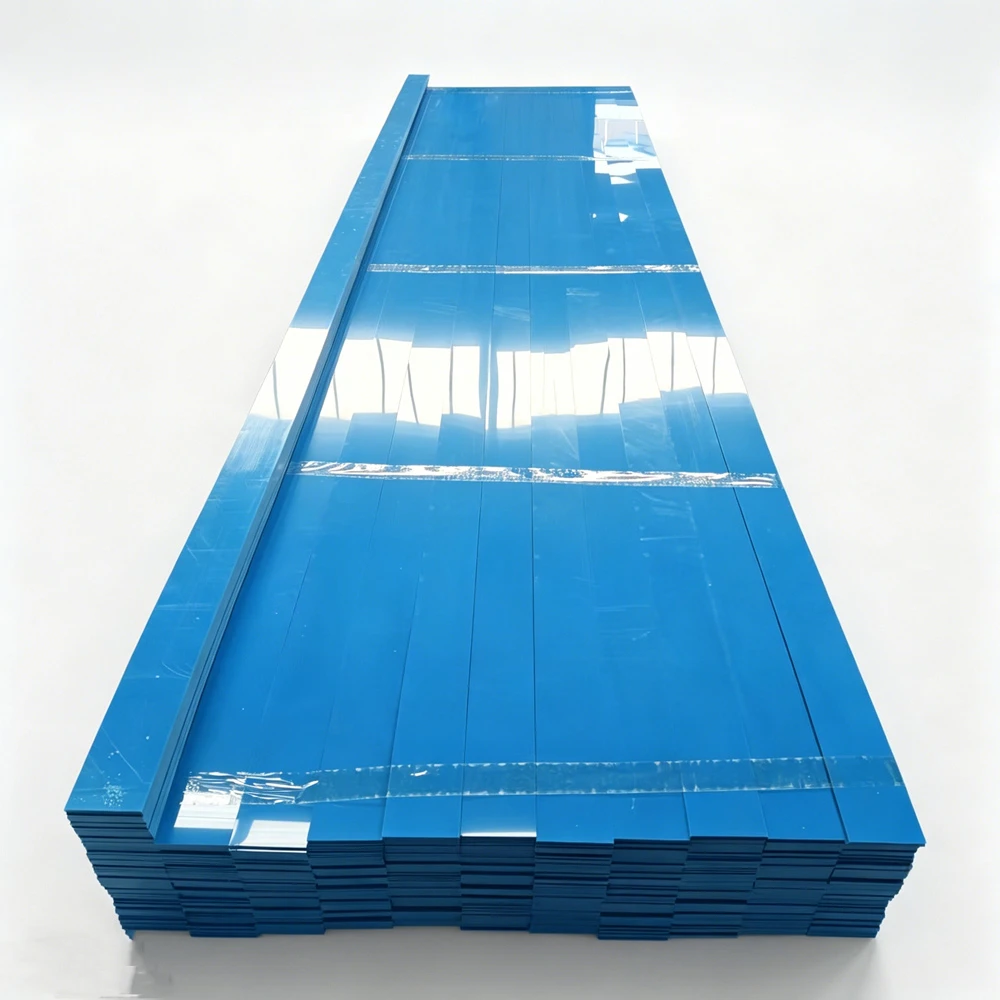
An HDPE wear resistant strip is an industrial wear-resistant component manufactured from high-density polyethylene (HDPE). HDPE is a commonly used thermoplastic material known for its good mechanical properties, chemical resistance, and wear resistance. Through appropriate processing methods, it can be manufactured into wear strips suitable for different types of machinery and industrial environments, meeting the requirements of equipment used in sliding, conveying, and material contact applications.
During industrial production, many types of equipment operate continuously while handling, conveying, or moving materials. Constant friction between metal components, materials, and equipment surfaces can cause wear on contact areas and affect equipment performance. HDPE wear resistant strips are generally installed in areas where friction is likely to occur. They serve as protective components that absorb part of the wear and reduce direct friction against the main equipment structure.
Compared with some traditional metal wear-resistant components, HDPE wear resistant strips are relatively lightweight and offer lower friction. They provide a smooth contact surface for sliding components, helping reduce frictional resistance during equipment operation. In addition, their elasticity and impact resistance help absorb some of the impact generated by material contact or collisions, reducing damage to contact areas.
HDPE wear resistant strips also offer good water resistance and resistance to many chemical substances. They can maintain good performance in industrial environments where moisture, water, or certain corrosive substances are present. Therefore, they are suitable not only for general dry environments but also for certain humid working conditions and areas where material residues may accumulate.
In terms of applications, HDPE wear resistant strips are commonly used in conveyor systems, production lines, guide devices, sliding tracks, mining machinery, and agricultural machinery. Depending on the equipment structure and operating conditions, they can function as conveyor guide components, sliding liners, or protective strips for equipment contact surfaces.
Furthermore, HDPE wear resistant strips have relatively smooth surfaces that help prevent certain materials from sticking easily. They are also easy to clean during routine maintenance. In production environments requiring continuous material conveying, this characteristic helps reduce material buildup and keep equipment contact areas clean.
Overall, HDPE wear resistant strips are industrial plastic components that combine wear resistance, low friction, corrosion resistance, and ease of maintenance. By improving the working conditions of equipment contact surfaces, they help reduce friction-related wear and support stable equipment operation.


