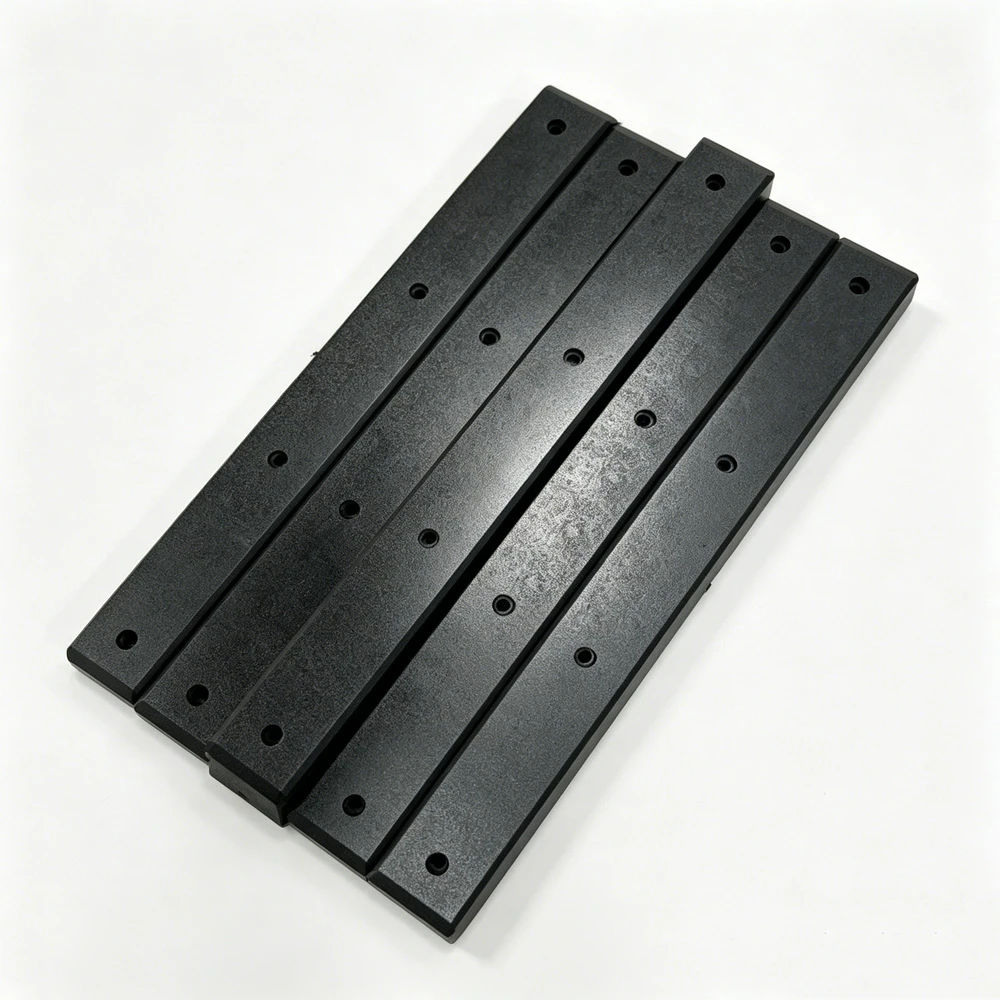
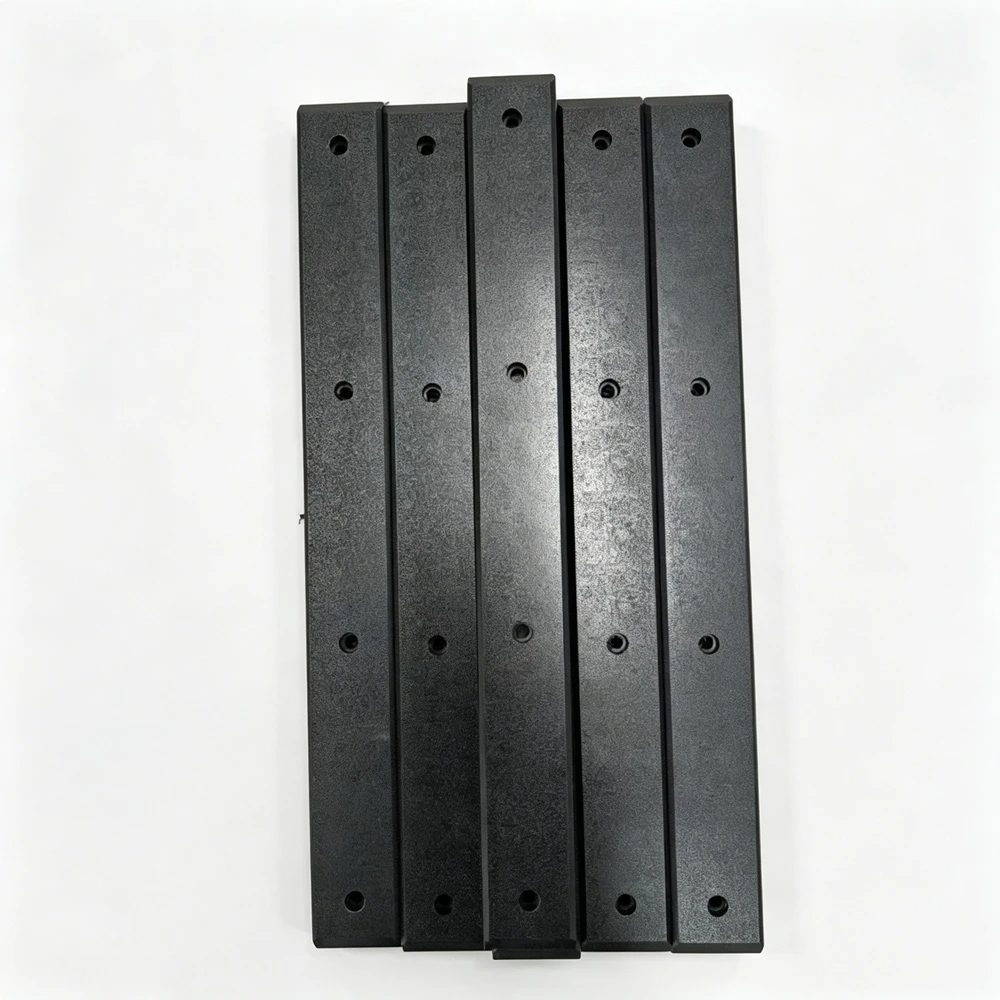
HDPE wear‑resistant strip delivers medium‑to‑upper‑level wear‑resistant performance. It outperforms ordinary rubber, ABS, common PP plastics and most nylon materials, while lagging behind ultra‑high‑molecular‑weight polyethylene. It is applicable to medium‑intensity sliding‑friction scenarios and not suitable for extreme‑working‑condition environments with heavy loads and continuous scouring by numerous sharp hard materials. Its wear‑resistant capacity depends not only on material properties but also on friction modes, contact pressure, sliding speed, mating‑surface material and existence of abrasive particles.
Due to molecular‑structure characteristics, HDPE has a low friction coefficient and inherent self‑lubricating properties. When metal chains or metal components slide smoothly on HDPE wear‑resistant strip without hard‑particle interference, wear rates stay low with even and gentle surface loss. Smooth friction surfaces will be formed after abrasion without local cracking or rapid deepening of grooves. This accounts for its wide adoption as chain guide rails for various conveying equipment. Under pure‑sliding conditions without abrasives, it achieves far better wear‑resistant performance than rubber accessories whose surfaces are prone to ploughing‑off and rapid wear under continuous sliding friction. Wear rates of ordinary nylon parts rise sharply after friction‑coefficient increase caused by moisture absorption. HDPE wear‑resistant strip maintains stable wear‑resistant performance without interference from water vapor.
Once sand, metal scraps and other hard particles get trapped between friction surfaces, abrasive wear will occur. The surface of HDPE wear‑resistant strip will be continuously scraped and chiseled by particles, leading to obviously accelerated wear. Higher particle hardness, sliding speed and contact pressure bring more severe wear aggravation. Hence it is not recommended for working conditions with direct continuous scouring by ores or sharp coarse‑grained materials, where ultra‑high‑molecular‑weight polyethylene wear‑resistant materials shall be adopted instead.
Temperature conditions also affect wear‑resistant performance. Stable wear‑resistant properties can be maintained within the normal operating range of ‑20℃ to 60℃. Long‑term exposure to temperatures above 80℃ will trigger material creep and aggravated extrusion wear with declined wear‑resistant capacity. It retains favorable toughness at low temperatures without embrittlement, so its wear‑resistant performance will not drop substantially in low‑temperature environments. Material quality of mating friction parts also makes differences. Smooth metal surfaces cause minor wear, while rough metal surfaces with burrs will accelerate wear of HDPE wear‑resistant strip.
Objective evaluation shall be made on its wear‑resistant positioning during practical type‑selection. It is not top‑tier wear‑resistant plastic, yet it features balanced comprehensive performance and prominent cost‑effectiveness. Its wear‑resistant capacity can fully satisfy production requirements to achieve satisfactory service cycles for light‑load and medium‑load pure‑sliding conveying scenarios. For scenarios with high pressure, high speed and abundant hard particles, material upgrading or working‑condition optimization to reduce abrasive‑particle intervention shall be carried out instead of merely relying on HDPE wear‑resistant strip. During operation, regular cleaning of accumulated granular impurities on friction positions and prevention of equipment overload can fully unlock its wear‑resistant potential, slow down abrasion progress, extend actual service cycles and cut spare‑part replacement frequency of equipment.