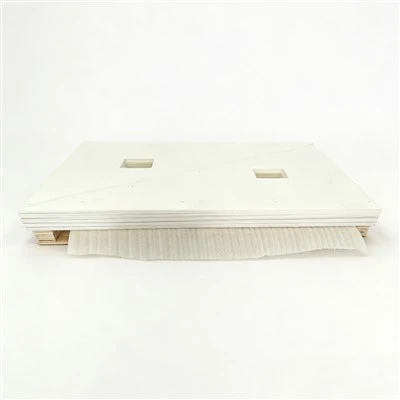
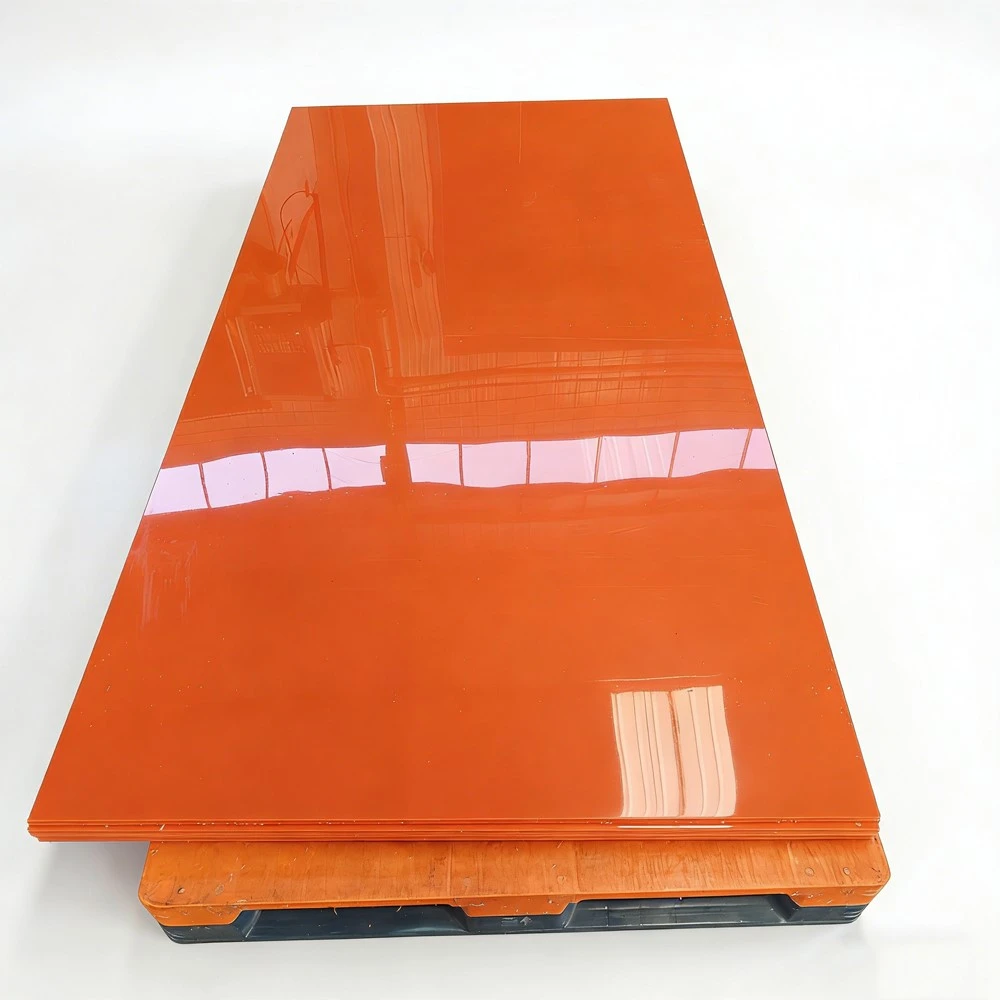
Many end‑users worry that Smooth HDPE Sheet may soften, bend, deform or collapse under summer heat, equipment‑generated heat or outdoor sun exposure. In fact, Smooth HDPE Sheet achieves competitive high‑temperature performance among plastic sheets. It remains stable without softening‑deformation under regular high‑temperature circumstances and only alters shape under extreme high‑temperature conditions. It fits most civil‑use and general‑industrial high‑temperature‑environment applications.
First, consider its performance under regular high‑temperature scenarios. Summer outdoor sun exposure, high‑temperature confined‑space environments, heated general‑industrial workshops and conventional equipment heat‑dissipation temperatures all fall within the sheet's tolerance range. Even under intense summer sunlight with elevated surface temperature, Smooth HDPE Sheet will not soften, turn pliable, bend or deform. Surfaces stay flat and rigid with intact structural stability. This constitutes a key advantage over thin ordinary‑grade PE sheets and low‑quality plastic sheets, which tend to soften, deform and arch under solar heating. Premium Smooth HDPE Sheet delivers exceptional thermal stability.
Material‑wise, high‑density polyethylene features high crystallinity and stable molecular structures. Its heat‑distortion temperature is far higher than common ambient‑environment temperatures, granting it outstanding thermal stability. It is barely affected by routine temperature fluctuations. Under alternating four‑season temperature shifts and everyday high‑low‑temperature cycles, it avoids excessive thermal‑expansion‑cold‑contraction deformation, edge warping and arching. Its excellent shape‑retention capability makes it well‑suited for year‑round open‑air deployment and high‑temperature‑workshop service. It achieves uniform heat resistance across the whole panel; local softening or partial deformation under heating rarely occurs, ensuring consistent overall performance.
Still, every material has its temperature‑resistance limit, and Smooth HDPE Sheet is not infinitely heat‑resistant. When exposed to persistent high‑temperature heat sources, close‑range open‑flame baking, ultra‑hot equipment heat sources or industrial high‑temperature baking environments beyond its tolerance threshold, its surface will gradually soften. Continuous high‑temperature exposure triggers bending and shape alteration, and melting may arise under extreme heat. Such ultra‑high‑temperature circumstances represent special‑case industrial working conditions rather than ordinary operating environments. The vast majority of practical‑use cases never reach this temperature threshold.
Furthermore, short‑term temperature rises and intermittent high‑temperature exposure cause zero damage. Once temperatures drop, the sheet restores its stable state without residual deformation or structural harm. Compared with wooden boards which crack, peel and carbonize under heat, and ordinary plastic sheets which soften, age and deform under high heat, Smooth HDPE Sheet boasts prominent thermal‑stability advantages. In short, it maintains stable configuration and intact performance in common civil‑use, outdoor and general‑industrial high‑temperature‑setting scenarios, with no risk of softening‑deformation.