

Selecting the appropriate thickness for Smooth HDPE Sheet is essential for meeting application requirements, optimizing cost efficiency and extending service life. Unnecessarily thick sheets raise expenses, while overly thin sheets risk deformation and shortened service life under stress. The core principle is to match thickness according to four key dimensions: application scenario, stress mode, load‑bearing intensity and service frequency, to satisfy diverse working‑condition requirements.
First are light‑duty non‑load‑bearing and mild‑protection scenarios. In these cases, sheets bear little pressure, rolling force or impact force and serve only for isolation, shielding, decoration, simple protection or waterproof lining. Thickness requirements are modest. Typical use‑cases include simple indoor barriers, dust‑proof equipment baffles, basic wall liners, small‑sized water‑tank linings and site‑separation baffles. Thin‑gauge Smooth HDPE Sheet fully meets such demands. It is lightweight and easy to handle and install; it stays flat and stable without deformation or shaking while lowering overall costs for light‑duty applications.
Second are general mild‑stress and high‑contact scenarios, which represent the most common applications. Examples include simple indoor floor paving, workbench panels, small‑size storage base plates, regular outdoor decorative panels and lightly‑friction equipment liners. Sheets endure human foot traffic, placement of small‑sized goods, routine mild friction and minor impacts. Moderate‑thickness sheets are the optimal choice. They balance toughness and hardness, resist bending deformation and abrasion, deliver stable daily performance and offer the best cost‑performance ratio for most civil‑use and small‑scale general‑industrial applications.
Next are medium‑load‑bearing and high‑frequency‑stress scenarios, covering workshop floor paving, large‑equipment base plates, logistics turnover base plates, outdoor walkway paving, sewage‑pool liners and panels for long‑term material stacking. Sheets sustain persistent pressure from heavy objects, frequent stepping, material friction and mild rolling. Thin sheets may bend or dent under such loads, so medium‑heavy‑gauge sheets are recommended. They feature enhanced structural stability, compressive strength and deformation resistance. They resist deformation and cracking under long‑term load and achieve greatly extended service life under high‑frequency medium‑stress operating conditions.
Last are heavy‑duty, high‑intensity‑stress and harsh‑outdoor‑environment scenarios, such as heavy‑equipment load‑bearing base plates, heavy‑duty factory‑passage paving, large‑stockyard panels, high‑impact protective panels and panels for long‑term rolling operations. Sheets endure massive pressure, heavy‑object impact and high‑intensity mechanical force. Extra‑thick Smooth HDPE Sheet must be specified. Extra‑thick variants possess high compactness, rigidity and toughness. They excel in rolling resistance, impact resistance and deformation resistance. Even under persistent heavy‑duty stress, surfaces remain flat without denting, bending or cracking, coping with harsh working conditions.
To sum up, thickness selection should avoid blind decision‑making. Choose thin‑gauge sheets for light‑protection purposes, standard‑gauge sheets for general‑purpose use, medium‑heavy‑gauge sheets for load‑bearing applications and extra‑thick sheets for heavy‑duty harsh‑condition scenarios. Matching thickness to actual‑use cases guarantees reliable performance and controls procurement expenditure to prevent resource waste.
How to select the proper thickness for Smooth HDPE Sheet?
Popular Products

U Shaped Nylon Slider
U Shaped Nylon Slider can replace traditional metal sliding components. Made from modified nylon base material, it

UHMWPE Silo Lining Board
UHMWPE Silo Lining Board eliminates material wall‑adhesion and bridging blockages to enable smooth material

Nylon U Shaped Slider
Nylon U Shaped Slider features prominent inherent self‑lubricating properties that cut lubrication‑maintenance costs

Colorful HDPE Matte Sheets
Colorful HDPE Matte Sheets retain all excellent inherent properties of standard HDPE. Produced through an integral

HDPE Matte Sheets
HDPE Matte Sheets deliver outstanding overall cost performance. Made of dense, stable raw materials, they resist acids,
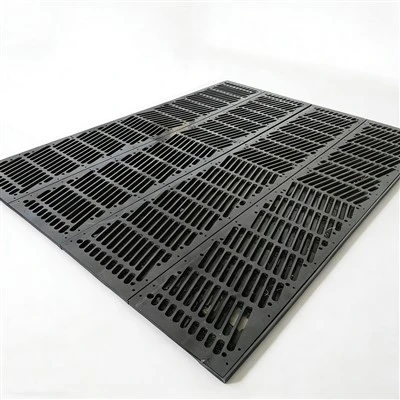
High Performance UHMWPE Suction Box Cover
The High Performance UHMWPE Suction Box Cover delivers greatly enhanced wear and abrasion resistance. It effectively