

One of the most prominent merits of POM Rod lies in its superior self‑lubricating performance. Different from metal, wood and ordinary hard plastics that rely heavily on external lubrication for smooth movement, POM Rod can be assembled and operated directly without lubricating oil or grease in most common‑duty scenarios. It qualifies as a low‑maintenance wear‑resistant profile.
Self‑lubrication originates from its physical material characteristics. Dense smooth surfaces and low friction coefficient are inherent to POM molecular structures. For low‑speed sliding, reciprocating transmission, moderate rotary support, guiding and limit‑support applications, POM Rod maintains low friction when contacting metal, plastic or rubber mating parts. It runs smoothly without seizure, dry‑noise or excessive wear and satisfies regular practical demands.
Most general‑purpose industrial equipment adopts POM Rod with zero lubrication throughout its service cycle. Many customers select POM Rod precisely for its lubrication‑free and low‑maintenance strengths. Compared with metal components requiring regular oil refilling and anti‑rust maintenance, POM Rod greatly cuts equipment‑maintenance workload and costs. It operates reliably for long periods without lubrication for medium‑and‑small‑sized machinery and general‑purpose transmission components.
Even though routine lubrication is not compulsory, auxiliary lubrication can optimise performance under severe working conditions, which serves as an optional enhancement rather than a must‑have measure. Adding small amounts of general‑purpose lubricating grease is recommended for continuous high‑speed cyclic movement, heavy‑load friction, high‑precision silent‑equipment applications or projects pursuing extended service life. Supplementary lubrication further reduces friction loss, suppresses operating noise and slows surface abrasion for both POM Rod and matching components.
Standard common lubricants are compatible with POM Rod. Frequent re‑lubrication is not required. A small amount applied during initial assembly sustains smooth operation for a long time. For low‑speed intermittent‑use conditions, extra lubrication brings no practical benefit. Excess grease may attract dust and impurities and impair surface cleanness and movement performance.
Some users confuse POM Rod with metal and ordinary plastics and wonder whether regular lubricating maintenance is necessary. Metals lack self‑lubrication and suffer heavy dry‑friction wear and seizure. Conventional plastics generate high friction and tend to jam without lubricants. By contrast, self‑lubricating properties of POM Rod cover over 90 percent of common‑duty situations. Stable operation is achieved with zero maintenance and zero lubrication.
To summarise, POM Rod requires no lubricant for regular daily‑duty applications thanks to its built‑in self‑lubricating and low‑maintenance advantages that fit most general‑purpose working conditions. Auxiliary lubrication can be adopted optionally for high‑intensity, high‑precision or heavy‑load scenarios. No mandatory lubrication rule applies, and its usability surpasses traditional wear‑resistant materials.
Is lubrication required for daily use of POM Rod?
Popular Products

U Shaped Nylon Slider
U Shaped Nylon Slider can replace traditional metal sliding components. Made from modified nylon base material, it

UHMWPE Silo Lining Board
UHMWPE Silo Lining Board eliminates material wall‑adhesion and bridging blockages to enable smooth material

Nylon U Shaped Slider
Nylon U Shaped Slider features prominent inherent self‑lubricating properties that cut lubrication‑maintenance costs

Colorful HDPE Matte Sheets
Colorful HDPE Matte Sheets retain all excellent inherent properties of standard HDPE. Produced through an integral

HDPE Matte Sheets
HDPE Matte Sheets deliver outstanding overall cost performance. Made of dense, stable raw materials, they resist acids,
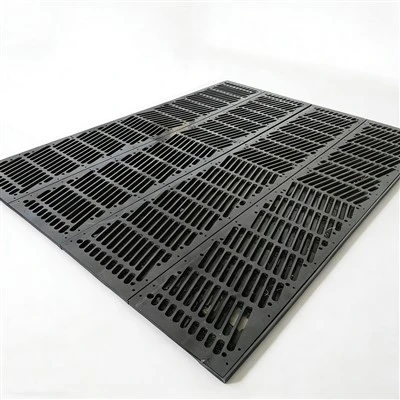
High Performance UHMWPE Suction Box Cover
The High Performance UHMWPE Suction Box Cover delivers greatly enhanced wear and abrasion resistance. It effectively