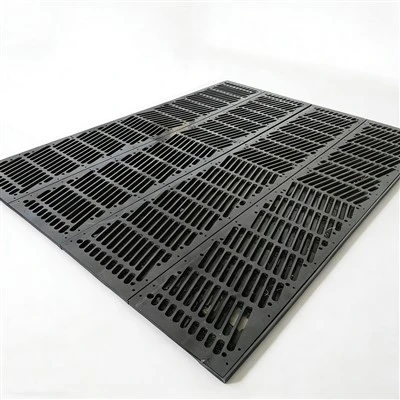

Marine‑organism fouling represents a common challenge for protective fittings at wharves and aboard vessels. Accumulated seaweed, barnacles, oysters and shellfish add extra weight to fenders, impair surface integrity, accelerate ageing and corrosion of conventional materials, degrade protective capacity and raise maintenance expenses. Benefiting from distinctive material structure and chemical characteristics, UHMWPE Fender pads possess natural anti‑fouling capacity and rank among top‑performing marine‑protection materials, fundamentally mitigating biofouling troubles.
Their resistance against seaweed and shellfish fouling stems from both physical structure and chemical traits. Physically, finished UHMWPE boasts highly compact and smooth surfaces free of capillary pores, crevices or honeycomb defects with superior flatness. Barnacles, oysters and other shellfish rely on secretions to anchor themselves inside gaps and pores for secure attachment; seaweed also requires rough substrates for growth. The dense smooth surface of UHMWPE Fender pads eliminates anchoring conditions for marine organisms. Even when marine spores and larvae come into contact with surfaces via seawater currents, stable colonisation cannot be achieved.
Furthermore, its low‑friction self‑lubricating property enables a slippery water film covering pad surfaces. Spores, planktonic algae and shellfish larvae slide away with tides and wave flows instead of settling and accumulating. Unlike rubber, concrete and wooden fenders with rough porous surfaces that trap sediment and microorganisms and serve as hotbeds for marine‑organism reproduction, UHMWPE Fender pads physically eliminate prerequisites for biofouling.
Chemically, UHMWPE functions as an inert polymer. It is water‑insoluble and will not react with seawater salts, acid‑alkali substances or metabolic products excreted by marine microbes, exhibiting zero bio‑inducing properties. Conventional fender materials release trace substances in seawater, attracting microbial aggregation and subsequent seaweed and shellfish fouling. By comparison, UHMWPE releases no hazardous substances and provides no nutritional environment for microbial proliferation.
In real‑world marine applications under full seawater immersion and alternating tidal wet‑dry cycles, UHMWPE Fender pads maintain largely clean surfaces with rare seaweed blooming or shellfish fouling. Even in hot humid summers when marine organisms reproduce vigorously, only sparse lightweight temporary attachments appear without deep‑rooted or large‑scale hard fouling. Such mild attachments merely rest upon surfaces without structural bonding and can drop off under water‑flow impact or minor vessel friction. No thickening build‑up or corrosion to fender substrates occurs.
Unlike traditional fenders requiring regular manual removal of shellfish and seaweed plus repeated descaling, UHMWPE Fender pads demand no dedicated anti‑fouling treatments or anti‑fouling paint coating. Their native anti‑biofouling property preserves smooth surfaces as well as cushioning and wear‑resistant performance over long‑term service. Maintenance workload for wharves is significantly reduced, rendering them suitable for diverse coastal and inland water‑protection projects.